The book
Winning AI Search
The Indie Developer's Playbook for Getting Cited by Google AI Overviews, ChatGPT, Perplexity, and Claude in 2026
by LIPAI WANG · 17 chapters · 18 diagrams · ~20 worked formulas
Now publishing on Kindle: the store link appears here as soon as Amazon lists it. The book is sold only on Kindle and isn't part of the course.
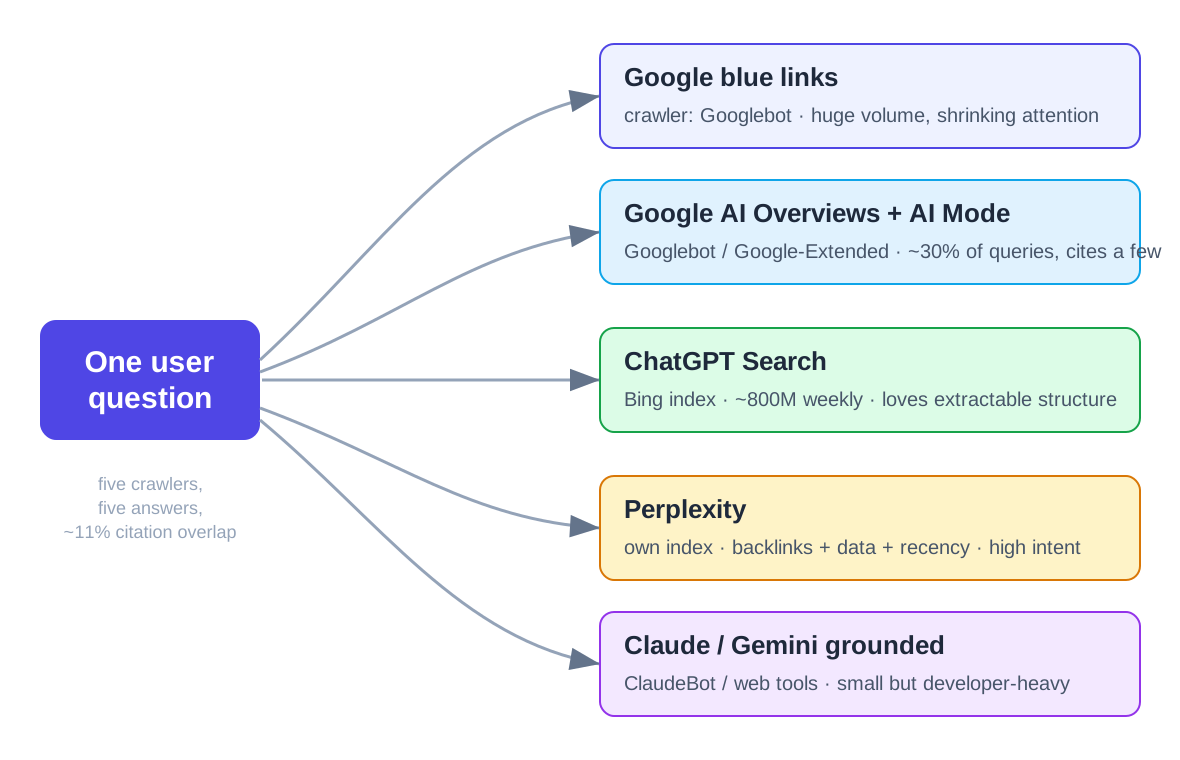
Search stopped being one thing
A single question now fans out across at least five surfaces. Several of them start from the same search indexes, but each picks and orders its sources its own way, so ranking well is an input to AI visibility, not a guarantee of it. Three patterns from published industry estimates (signals of direction, not constants) explain why the old playbook solves for the smallest slice of the pie:
- Zero-click
- a large share of searches end without a click
- Low overlap
- ChatGPT and Perplexity often cite different domains
- Below the top
- many AI Overview citations come from pages outside the top few results
Together they mean ranking and being cited are no longer the same result: ranking feeds the pool an engine retrieves from, and citation is a separate selection step on top. The book is a field manual for that second step — the one a solo developer can still win cheaply, because third-party authority scores appear to predict AI citations less well than they once predicted rankings. A new domain with useful, original pages can be cited early, though nothing guarantees it.
Inside the book
The New Search Reality
Five surfaces, not one. Why ranking and citation split into separate economies — and a scoring rule for picking the two surfaces worth your hours.
The Schema Trust Layer
Schema as accurate labeling for visible facts (not a citation multiplier), the copy-paste JSON-LD to ship it, and the validation workflow that stops schema failing silently.
Positioning and Penalties
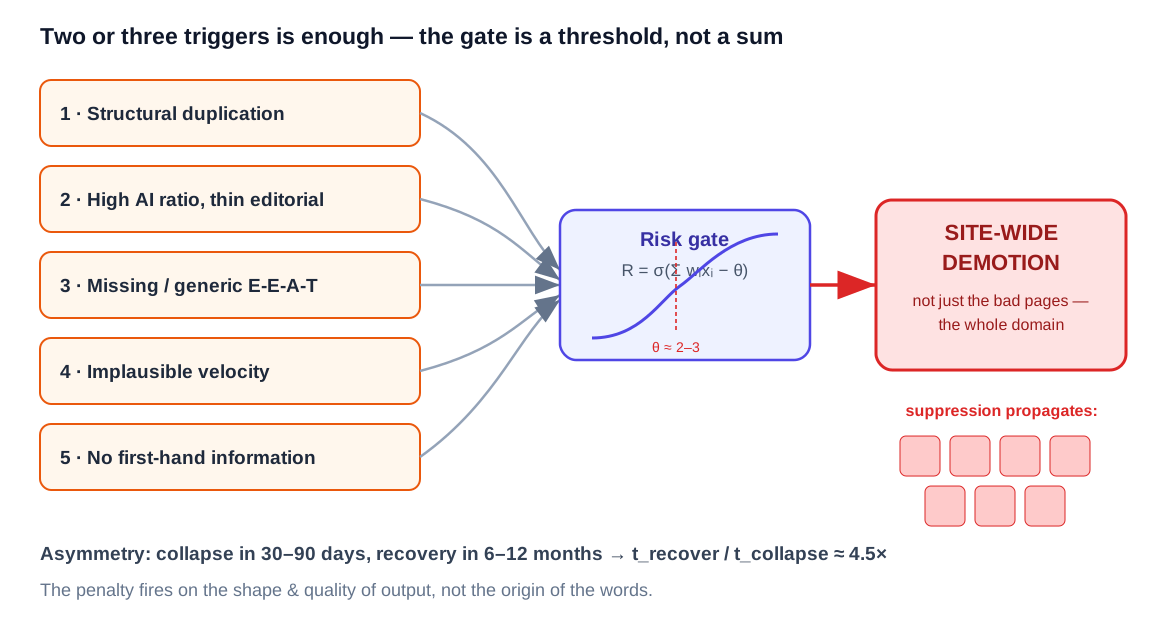
The protection-racket trap, the five triggers behind Scaled Content Abuse demotion, and why directory-template clones get suppressed.
The Technical Field Guide
The Cloudflare default that silently blocks GPTBot and ClaudeBot, the SPA fallback that serves your homepage at /robots.txt, and the five-minute IndexNow win.
Measure What Matters
Read a Search Console panel like a diagnostician, and run a measurement loop that attributes every change you make.
Diagrams, not decoration
Every chapter carries figures and formulas you can run against your own site. Two of the eighteen:
Book or course?
The book is the written foundation — read it end to end in an evening, on Kindle. The course is where you see it applied: screen-recorded video lessons added module by module, written lessons, templates, the companion tools, and every future update. They're sold separately.