Fundamentals — the new search reality · 8 min read
The AI search landscape in 2026
Why the playbook that ranked you to #1 in 2022 misses most of the search surface today, and what changed.
Search in 2026 is not one surface. It's at least five, and they barely talk to each other.
If you're an indie developer who learned SEO from "rank for keywords, write 2000-word articles, build backlinks" — that playbook is solving for the smallest slice of the pie. This lesson is the map. Every other lesson assumes you've internalized it.
The five surfaces
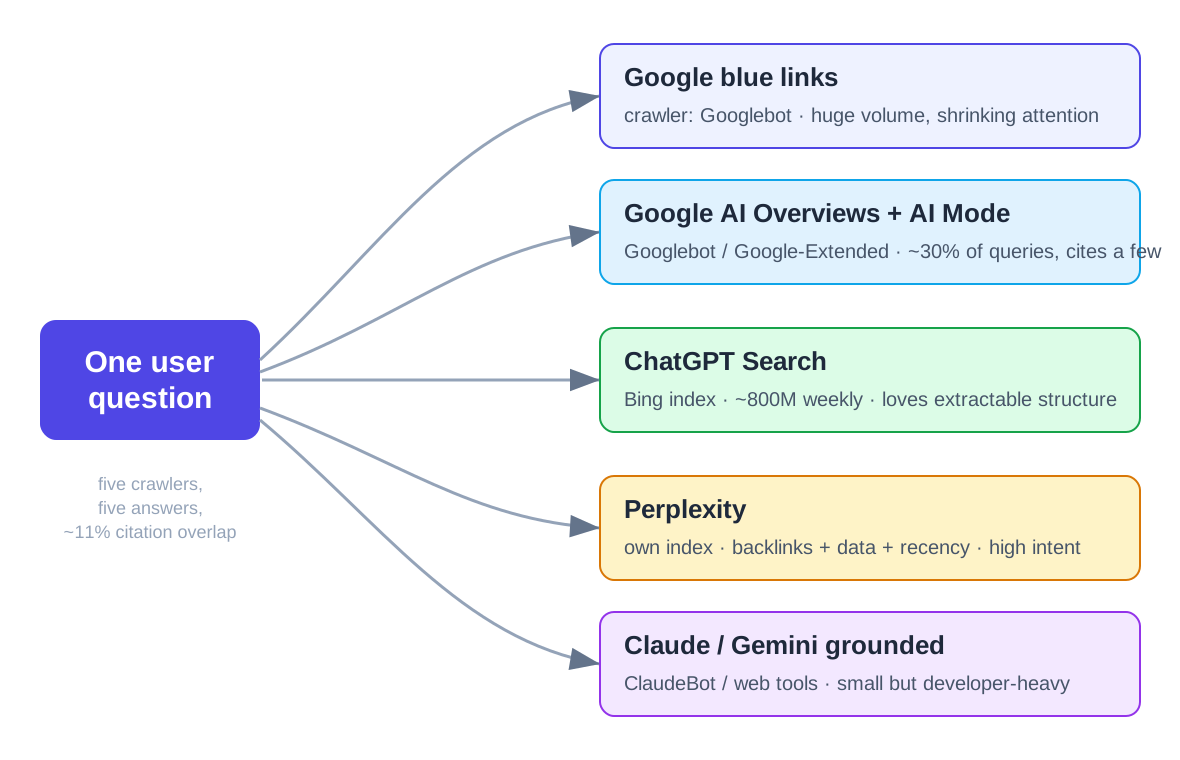
Each of these has its own ranking signals, its own crawler, and its own citation pattern:
- Google blue-link results — the original. Still huge volume but shrinking share of attention as AI Overviews eat the top of the page.
- Google AI Overviews + AI Mode — the AI summary that appears above blue links for ~30% of queries (and growing). Cites a small handful of sources directly.
- ChatGPT Search — uses Bing's index. Citation behavior favors structured, extractable content. Roughly 800M weekly users as of early 2026.
- Perplexity — distinct ranking signals from ChatGPT despite both being AI search. Emphasizes high-authority backlinks + data-rich content + recency.
- Claude / Gemini grounded answers — both have web tools that cite. Smaller traffic share but growing fast among technical audiences.
The brutal stat to internalize: only 11% of domains cited by ChatGPT are also cited by Perplexity for the same query. If you optimize for one, you don't automatically rank in the other.
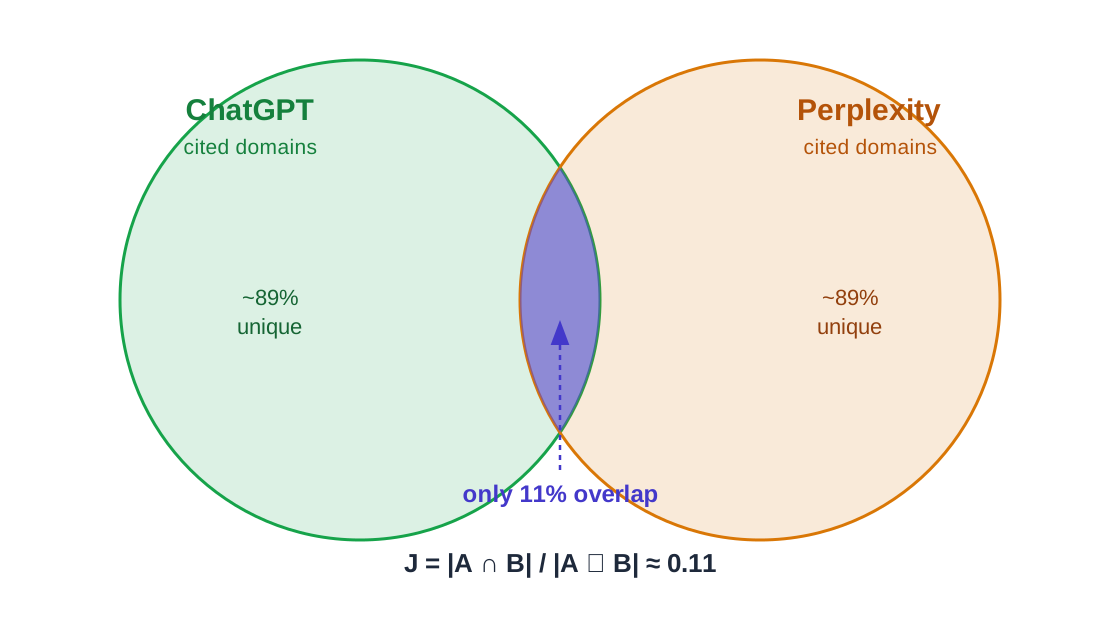
In set terms, the Jaccard overlap — shared domains divided by total distinct domains — is about 0.11. When that number is near 1, surfaces are interchangeable and "rank once, win everywhere" holds. At 0.11 they are nearly independent: the coverage you earn on one surface barely transfers to the others.
What didn't change
Some things still matter exactly as much as they did in 2018:
- Page speed and Core Web Vitals. Slow pages don't rank, in any surface.
- Clear titles and meta descriptions. These are the first thing every crawler reads.
- Internal linking. Topical authority is real, and entity disambiguation depends on it.
- HTTPS, valid HTML, sitemap.xml, robots.txt. Technical hygiene is non-negotiable.
If your site is failing on these, no GEO tactic in the world will compensate. Fix the foundation first.
What changed
The shifts that the rest of this course addresses:
- Schema.org went from "rich snippet bonus" to "trust signal core". Properly marked-up pages get 73% higher AI citation rates than identical content without schema.
- Domain Authority lost most of its correlation. r=0.18 in early 2026 (it was r=0.55 in 2020). New domains can win citations on the same day they publish.
- 47% of AI Overview citations are from pages ranking below position 5 in traditional results. The AI is willing to dig deeper than the human user ever did.
- Multimodal content (text + images + video + schema, all marked up consistently) gets 156-317% more citations than text-only.
- E-E-A-T's "Experience" pillar is now visibly weighted. Named authors with bios and verifiable real-world experience beat anonymous "10x experts" by a wide margin.
What this course teaches
Every module that follows is a tactic that targets at least one of these surface shifts. You'll ship code on every lesson — schema templates, robots rules, sitemap generators, citation trackers, content audits. By the end you'll have a measurement-driven workflow, not a vibes-based one.
The next lesson, The citation economy, breaks down why traditional "ranking" is half the game and "being the cited source" is the other half — and how indie sites can win the second one cheaper.
→ Next: The citation economy