Fundamentals — the new search reality · 12 min read
The citation economy
Ranking gets you traffic if the user clicks. Citations get you authority even when they don't. Why indie SaaS should prioritize the second.
Ranking and citation are different goals with different tactics. Most SEO courses still conflate them. Let's not.
What "ranking" actually buys you
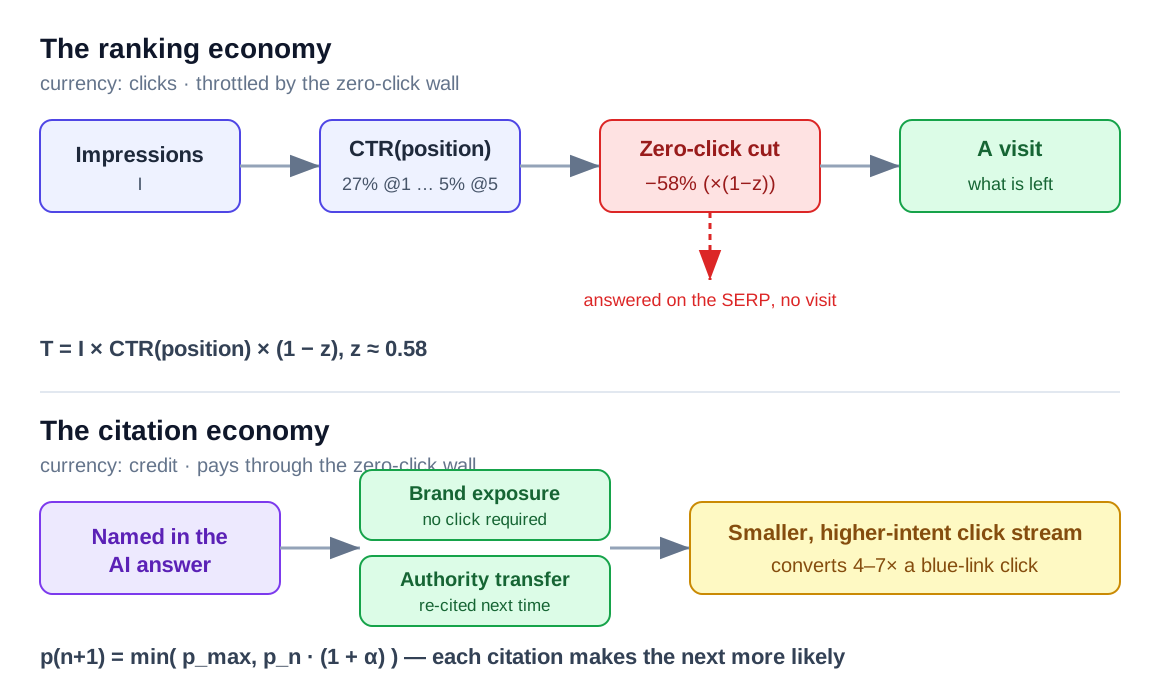
A traditional ranking is a position in a list. Position 1 buys you ~27% click-through; position 5 buys you ~5%. The whole game has been: get into the top 5 so a human clicks through and lands on your page.
In 2026, that user behavior is half what it was three years ago. 58% of searches now end in zero clicks — the user gets their answer from the SERP itself (AI Overview, knowledge panel, featured snippet) and never visits your site.
So "ranking #1" is no longer the same as "winning the query." It's a necessary but insufficient condition for traffic — and not even necessary for attribution.
What "citation" actually buys you
A citation is a named reference inside an AI-generated answer. When Perplexity says "according to rankpropel.com..." — that's a citation. Even if the user never clicks, three things happen:
- Brand-mention attribution. Your name is in the answer. Repeated exposure across queries builds recognition even without click-throughs.
- Authority transfer. AI engines preferentially re-cite sources they've cited before. Each citation makes the next one more likely.
- Selective click-through. Users who DO click from AI answers convert at higher rates than blue-link clicks (4-7x in most measured cohorts). They came with intent informed by your content; they're closer to ready.
Why indie sites are structurally advantaged on citations
Traditional SEO rewards age, backlink mass, and domain trust accumulated over years. Indie sites lose that race.
Citation selection rewards different things:
- Extractability: how cleanly can the model pull a discrete, factual answer from your page? Short paragraphs, clear definitions, bulleted steps, explicit "X is Y" sentences. Indie writers, freed from corporate prose, are naturally better at this.
- Specificity: domain-specific claims with numbers, methodology, and dates. Generic "best practices" articles lose to specific case studies.
- Schema density: properly marked-up entities (Person, Article, FAQPage, HowTo, Course) signal trust regardless of domain age.
- First-hand experience markers: "I ran this for 30 days and saw X." Authority transfer happens on the experience signal, not the domain signal.
Every one of these is something a single founder can ship in an afternoon. None require a six-figure agency retainer.
The economic case
Here's the math that makes this a viable indie strategy:
- Average agency GEO retainer: $1,500-$8,000/month
- Average content brief production cost: $300-$800 per article
- Average citation lift per properly-engineered article: 1-5 citations across major engines within 60 days (measured by Otterly/Profound/etc.)
A founder who can produce 4 properly-engineered articles per month, at a few hours each, is matching mid-market agency output for the cost of a Stripe transaction. The course teaches the engineering.
What "properly engineered" means (preview of Modules 2-7)
Every article that wins citations in 2026 has roughly the same anatomy:
- One specific question per H2, phrased the way a real user would type it
- A direct answer in the first sentence of each section (extractability)
- At least one number, date, or methodology specific in each major claim
- Author bio with verifiable credentials (linked Person schema)
- JSON-LD matching the content type (Article + FAQPage + HowTo when relevant)
- Internal linking that disambiguates entities (link "schema" to your schema explainer page)
- An updated date that's actually recent — algorithms penalize stale-looking pages even when content is evergreen
Modules 2-7 go deep on each of these. Module 2 (next) is the entire schema strategy: which @type values lift citations most, the JSON-LD templates you'll ship as code, and how to validate.
The framework you should have by the end of this module
- You can name the five search surfaces and how they differ
- You can articulate why "ranking" and "citation" need different tactics
- You have a written list of which surfaces matter most for your specific niche (Module 1.3 — next session if you've bought)
Citation-first thinking is the mental model. Everything else in this course is the toolkit.
Sidebar — before you publish anywhere: every tactic in this lesson assumes you're building on a clean domain. If the .com you registered has a problematic history (PBN, gambling redirects, AI content-farm output), none of this compensates. See Audit a domain before you buy it for the six checks to run before you commit.
→ Next: Choosing your priority surfaces
This is one of the paid lessons. Unlock every module and every paywalled article for $199 one-time.