Why Perplexity and ChatGPT rarely cite the same sites
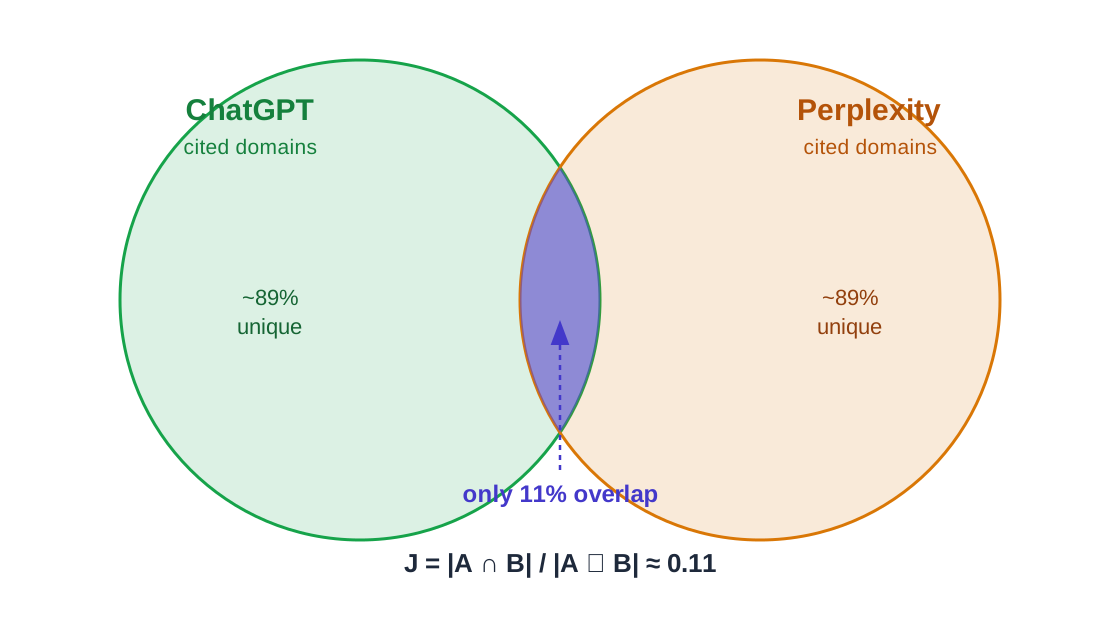
Only 11% of domains cited by both engines overlap. Here's what each one actually selects for, and how to optimize for both without duplicating work.
If you ran the same 1,000 informational queries through ChatGPT Search and Perplexity in 2026 and looked at which domains got cited in each, only about 11% of those domains would appear in both lists. That's an Ahrefs / SparkToro figure cross-validated by several smaller indie studies. The number is not 50%. It's not 30%. It's 11%.
That single data point reshapes how to think about GEO.
What ChatGPT Search actually selects for
ChatGPT Search is grounded in Bing's index. Whatever Bing indexes well becomes ChatGPT's universe of citable sources. So step one — and most indie sites skip this — is submit your sitemap to Bing Webmaster Tools. Bingbot does crawl independently of Googlebot, but a submitted sitemap is indexed materially faster.
Beyond indexing, ChatGPT's selection appears to favor:
- Information density per paragraph. Long-winded intros get skipped; the model pulls from the paragraph that contains the most factual claims in the fewest words.
- Clear H2 hierarchy that matches likely question phrasings ("What is X", "How to Y").
- E-E-A-T signals: named author + bio + visible publish/update dates. Without these, citation rates drop noticeably even for high-quality content.
- Schema.org Article + FAQPage markup. Pages with both get a measurable lift over pages with neither.
What ChatGPT does not seem to weight heavily: raw backlink count, domain age. Newer pages on smaller domains routinely win citations against older heavy-hitter sites.
What Perplexity selects for
Perplexity uses its own index, not Bing's. It crawls aggressively (PerplexityBot is one of the most active AI crawlers in server logs as of mid-2026) and selects with different priors than ChatGPT.
Observed Perplexity preferences:
- Backlinks and topical authority: Perplexity weights these closer to traditional SEO than ChatGPT does. Pages on domains with strong topical backlink profiles win.
- Data-rich content: original statistics, charts, methodology. Generic "best practices" posts lose to specific case studies.
- Recency:
dateModifiedschema and obviously-recent stats lift citations. Stale-looking pages get deprioritized even when content is evergreen. - Cleaner extraction: short, fact-dense paragraphs. Same as ChatGPT, but Perplexity is stricter — convoluted prose loses faster.
Perplexity also gives unusual weight to discussion-platform content (Reddit threads, niche forums) when those threads contain specific testimony or technical detail. A well-engineered Reddit answer can outrank your own site for the same query in Perplexity.
What this means tactically
You can't write a single "GEO-optimized" article and assume both engines pick it up. The overlap is too small. But you also don't need to write twice — most of the work is shared, with engine-specific finishing.
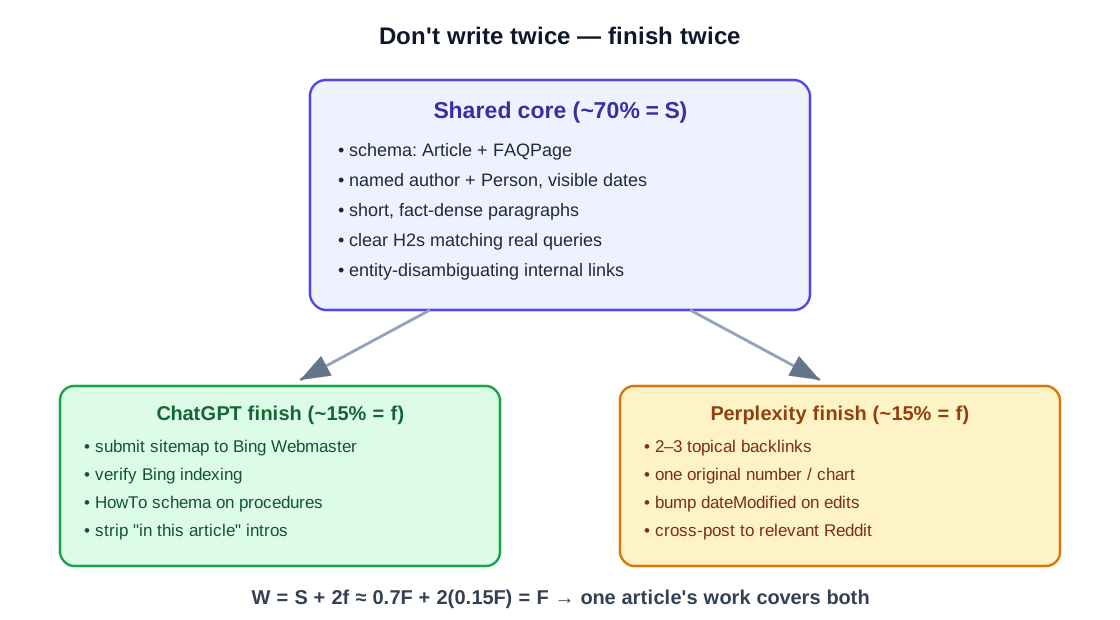
Shared (the 70% that helps both):
- Schema.org Article + FAQPage markup
- Named author with bio + Person schema
- Visible publish + update dates
- Short, fact-dense paragraphs
- Clear H2 hierarchy matching real query phrasings
- Internal linking that disambiguates entities
ChatGPT-specific finishing:
- Submit sitemap to Bing Webmaster Tools
- Verify content is indexed in Bing (not just Google) via Bing URL Inspection
- HowTo schema on procedural content
- Audit content for "in this article" intros — strip them; ChatGPT prefers direct starts
Perplexity-specific finishing:
- Pursue 2-3 quality backlinks from topical neighbors before publishing
- Include at least one original number, chart, or methodology specific
- Update
dateModifiedwhenever you make a non-trivial edit - Cross-publish summaries on relevant Reddit threads (with linkbacks where appropriate)
How to measure
The only way to know what's actually working is to track citations. The cheap route is a Playwright script that runs your target queries against both engines weekly and logs which domains are cited. The paid route is Otterly, Profound, Peec.ai, or AthenaHQ ($30-$200/month range as of early 2026).
The expensive mistake is optimizing without measurement. Module 8 of the course goes deep on the DIY measurement script; this is the section where most indie creators get their first real ROI.
TL;DR
ChatGPT and Perplexity cite mostly different sites. Build shared GEO foundations once, then finish for each engine separately. Measure citation lift, not just rankings. Don't write twice; finish twice.